Browse our permanent-mould casting projects
Looking for the ideal partner for permanent-mould gravity casting? With more than 25 years of experience of manufacturing cast parts in China, AGC offers the perfect solution with affordable tooling, low casting costs and highly competitive finishing (deburring, machining, surface treatment, packaging)
Permanent-mould gravity casting can help optimise production costs for precise parts produced in small- to medium-sized series. By manufacturing your parts in China, AGC can offer competitive pricing while maintaining consistent quality standards. Send us your parts drawings and requirements, and we will quickly come back to you with a quotation including tooling, part manufacturing and delivery costs to your location.
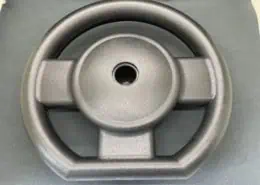
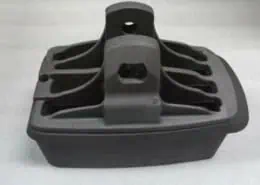
![[:en]Permanent casting aluminium parts[:]](https://agcis.com/wp-content/uploads/2019/09/gravity-casting1-241x179.webp)
aluminium coupling wheel
A356 with incolored anodisation
![[:en] Custom casting parts [:fr]Pièces fonderies sur plan](https://agcis.com/wp-content/uploads/2014/09/P1150167-241x179.webp)
Alu casting lever
Gravity casting
![[:en]Cheap gravity casting [:fr]Fonderie coquille pas chère](https://agcis.com/wp-content/uploads/2014/09/P1150166-241x179.webp)
Aluminium lamp body
Aluminium casting
![[:en] Gravity casting component [:fr]Composant en fonderie gravité](https://agcis.com/wp-content/uploads/2014/09/P1150174-241x179.webp)
Casting coupling
Gravity casting with machining
![[:en]how to choose casting supplier in China [:fr]Comment choisir fonderie en Chine](https://agcis.com/wp-content/uploads/2014/09/P1150178-241x179.webp)
Casting support
low-cost casting