
Injection moulding
Browse our plastic moulding projects below
Subcontracting plastic injection moulding parts often requires a significant investment in tooling, which may affect your project’s viability from the outset. That is why we offer our customers very competitive tooling costs while keeping injection moulding costs highly competitive.
Our quality-control procedures minimise defects, helping to ensure the success of your plastic injection moulding project through competitive pricing and compliance with your quality requirements.


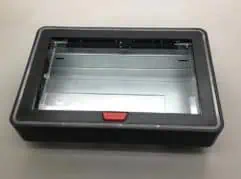
Plastic casing assembly for electronics
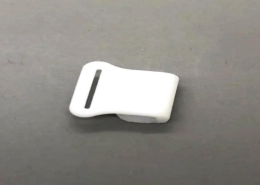
plastic injection for medical application
![[:en]injection plastique China [:fr]Injection plastique en Chine](https://agcis.com/wp-content/uploads/2014/12/P1160965-241x179.webp)
Plastic assembly
![[:en]LED collimator matrix [:fr]matrice de collimateurs LED](https://agcis.com/wp-content/uploads/2014/12/P1160971-241x179.webp)
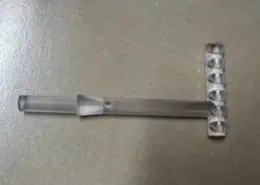
LED lens matrix
![[:en]Soft Keyboard [:fr]Clavier souple](https://agcis.com/wp-content/uploads/2014/09/P1150400-241x179.webp)
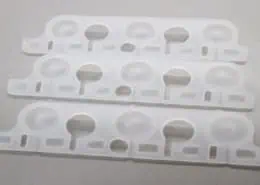
Silicone keyboard
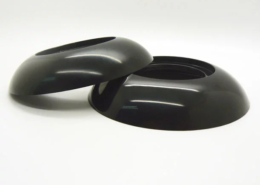
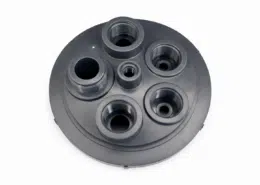
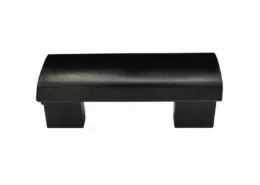
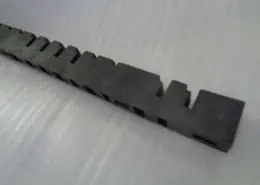
Black plastic flanges
![[:en] Rohs plastic part [:fr] Pièce plastique Rohs](https://agcis.com/wp-content/uploads/2014/09/P1140408-241x179.webp)
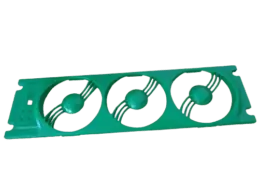
Plastic protection grid
![[:en]brass inserts in plastic [:fr]Inserts laiton dans composant plastique](https://agcis.com/wp-content/uploads/2014/09/P1110611-241x179.webp)
Plastic grid, brass inserts
![[:en] Injected plastic sucker [:fr]Injection de ventouses en plastique](https://agcis.com/wp-content/uploads/2014/09/P1130869-241x179.webp)
SmartPhone Sucker Pad
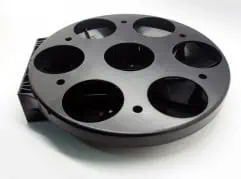
Traffic lighting casing
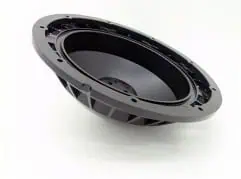
Plastic projector enclosure
![[:en]mirror polished injection [:fr]Injection poli miroir](https://agcis.com/wp-content/uploads/2014/09/P1150398-241x179.webp)
Plastic front flange
![[:en]PA6 parts [:fr]Pièces en PA6](https://agcis.com/wp-content/uploads/2014/09/P1150363-241x179.webp)
Fiberglass loaded Nylon
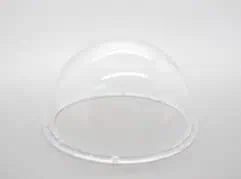
Video-camera dome
![[:en] plastic frenel lens China [:fr]Lentille fresnel en plastique China](https://agcis.com/wp-content/uploads/2014/09/P1150390-241x179.webp)
Pc D150 lens
![[:en]overmolding [:fr]surinjection](https://agcis.com/wp-content/uploads/2014/09/P1150406-241x179.webp)
PA + brass wheel nut
![[:en] Plastic assembly in China [:fr]Assemblage plastique en Chine](https://agcis.com/wp-content/uploads/2014/09/P1150404-241x179.webp)
Front face assembly
![[:en]ABS injection supplier [:fr]Injecteur ABS](https://agcis.com/wp-content/uploads/2014/09/P1150220-241x179.webp)
Plastic support
![[:en]Lens injection China [:fr]Injection letilles en Chine](https://agcis.com/wp-content/uploads/2014/09/P1150401-241x179.webp)
Plastic lenses
![[:en]Red plastic component [:fr]Composant plastique rouge](https://agcis.com/wp-content/uploads/2014/09/P1150356-241x179.webp)
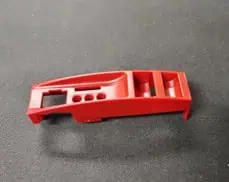
Plastic red cover
![[:enbi-material injection in China [:fr]Injection bi-matière en Chine](https://agcis.com/wp-content/uploads/2014/09/P1150391-241x179.webp)
Bi-material plastic nut
Based in Shanghai, China, AGC is your ideal supplier for the manufacture of plastic components
Our plastic subcontracting solutions include:
– Low costs for tooling and injected parts.
– Flexibility, with quick delivery and the ability to accept small orders.
– Experience: we have supplied plastic injection moulded parts from China since 2000.
-A wide range of available thermoplastics.
| Acronym | Name(s) | Comments |
|---|---|---|
| ABS | Acrylonittrile butadiene styrene | Widely used in injection moulding, low cost |
| ABS/PC | Mix of ABS + PC | Cheaper alternative than PC and tougher than ABS |
| PA(6/66) | Nylon, Polyamide | High T° resistance, often glass fiber/beads reinforced |
| PC | Polycarbonate (Lexan, Makrolon) | Easy to inject, tough material, may contain bisphenol A |
| PE | Polyethylene | Available in different densities, from LDPE to HDPE; easy to recycle |
| PEEK | Polyetheretherketone | Resistant to abrasion, low flamability |
| POM | Polyoxymethylene | Precision parts, high stiffness |
| PMMA | Poly(methyl methacrylate), (acrylic, plexiglass) | Good optical properties |
| PP | Polypropylene | Recyclable, easy to inject, sensitive to UV radiation |
| PPS | Polyphenylene Sulfide | Resistant to aggressive environments; requires a high injection temperature. |
| PS | Polystyrene | Low density; slow to biodegrade. |
– Expertise in overmoulding and assemblies.
Our quality commitments:
– Stable colours over time, with specific RAL and Pantone references available.
– Prevention of common plastic-part quality issues from the mould-design and injection-parameter stages, including weld lines, cracks, incomplete filling, white marks and burrs.
– Specialist materials, including UV-resistant plastics, glass-fibre-reinforced plastics, glass-bead-filled plastics, and plastics with high thermal or electrical conductivity.