
A la recherche d’une société d’usinage plastique ? AGC Industrial Solutions vous propose la réalisation de vos pièces sur plan dans les meilleurs délais aux meilleurs coûts. La cerise sur le gâteau ? La livraison est incluse !
Quelles limites à l’usinage de plastiques ?
Le plastique est une matière relativement facile à travailler, l’usinage s’effectue sur des centres d’usinage multi-axes grande vitesse, les pièces sont donc réalisées rapidement avec une très bonne tenue des tolérances.
Les tolérances normales dépendent de la matière et de la géométrie des pièces mais sont de l’ordre de +/- 0,1mm à 0,5mm. Pour des pièces plus critiques des tolérances serrées de l’ordre de +/- 0,02mm peuvent être tenues.
Contrairement à l’injection plastique, l’usinage ne nécessite pas d’angle de dépouille et n’implique pas de rétrécissement après réalisation il y a donc moins de risques de déformation.
Il est préférable d’ébavurer les pièces plastiques après usinage afin d’avoir un meilleur rendu cosmétique de l’usinage plastique et d’éviter les risques de coupure lors de leur utilisation.
D’éventuels filetages peuvent être réalisés directement dans la matière sans passer par des inserts.
Matières plastiques usinables
Pratiquement toutes matières disponibles en profilés, plaques ou feuilles pourrons être travaillées en centre d’usinage. Ci-dessous un tableau indicatif des différentes matières pour l’usinage et leurs caractéristiques :
| Matière plastique | Caractéristiques pour l’usinage |
|---|---|
| POM (Delrin) | – Excellente usinabilité – Résistance à l’abrasion et à l’usure – Tolérances serrées possibles |
| PEEK | – Haute température de fusion – Résistance chimique élevée – Usinage difficile en raison de sa dureté et de sa résistance |
| PC/ ABS | – Bonne résistance aux chocs et à la chaleur – Facile à usiner – Propriétés électriques et mécaniques intéressantes |
| Mylar | – Faible absorption d’eau – Bonne stabilité dimensionnelle – Usinage délicat en raison de sa nature plastique et de sa tendance à l’étirement, mais utilisable en feuilles pliables. |
| FR4 | – Rigidité et résistance mécanique élevées – Utilisé pour les circuits imprimés – Peut être cassant lors de l’usinage |
| PVC | – Bonne résistance chimique – Usinage relativement facile – Peut produire des vapeurs toxiques lorsqu’il est chauffé |
| PTFE (TEFLON) | – Très faible coefficient de frottement – Résistance chimique élevée – Usinage difficile en raison de sa faible conductivité thermique |
| PA (Nylon) | – Résistance à l’abrasion et aux chocs – Bonne isolation électrique – Usinage facile et tolérant, mais peut absorber l’humidité |
| PMMA | – Transparence optique élevée si poli – Facile à usiner – Sensible aux rayures et à la fissuration, nécessite une manipulation prudente lors de l’usinage |
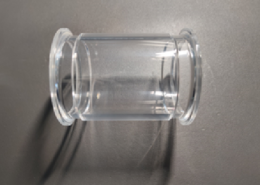
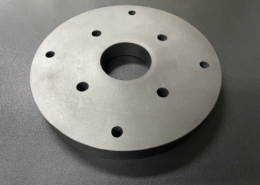
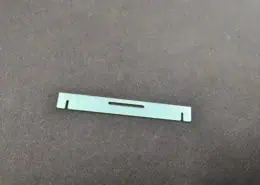
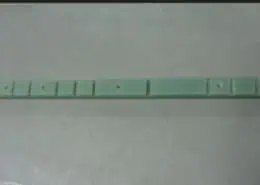
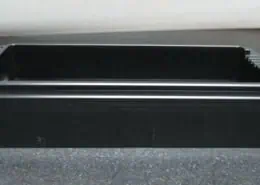
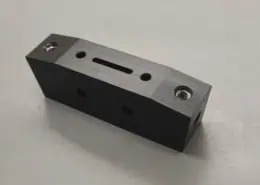
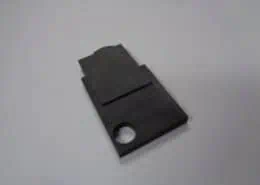
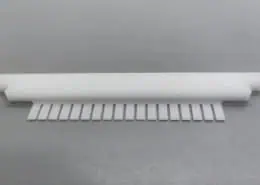
Pièces plastiques usinées fournies par AGCIS:
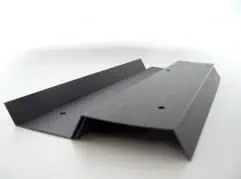
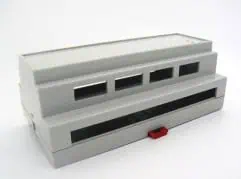
Pourquoi réaliser des pièces plastiques par usinage ?
-Usinages simples (découpe / perçage / pliages) à partir de plaques, feuilles ou profils.
-Formes spécifiques difficiles à obtenir par injection (plusieurs épaisseurs de matières sur une même pièce).
Pour la fabrication de faibles quantités de pièces plastiques, l’usinage permet d’éviter l’ouverture d’un moule d’injection coûteux, et le temps perdu en réglage des paramètres d’injection.
L’usinage plastique peut également remplacer l’usinage de métal afin de permettre des gains de poids, de permettre une meilleure isolation ou bien sûr une réduction des coûts.
La solution pour l’usinage du plastique
AGC Industrial Solutions vous offre une garantie qualité sur vos pièces d’usinage plastique afin de vous garantir des pièces conformes à vos attentes.
Un contrôle qualité en entreprise des pièces plastiques usinées avant expédition vous prémunit contre toute mauvaise surprise.