Browse our Die casting projects
Looking for the ideal partner for die casting ? With 20 years of experience of casting from China, AGC offers the perfect solution with cheap molds, low injection costs and very competitive finishing (deburring, machining, surface treatment, packing)
Although high pressure die casting pulls down parts unit cost, molds investment is consequent, reaching several tenth of thousand USD. Our localization in China enable us to provide 30% to 50% cheaper molds while guarantying the quality of the final parts. Send us your parts details, we will quickly come back to you with an offer including mold, parts and logistics costs to your place.
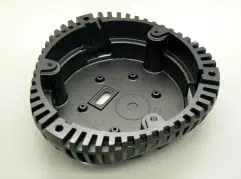
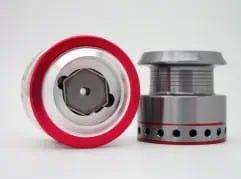
Eloxiertes gegossenes Aluminium Produkt
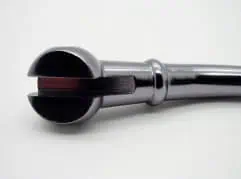
Verchromter Hebel
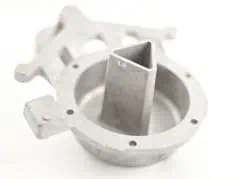
Abdeckung – Druckguß
Trommelkörper
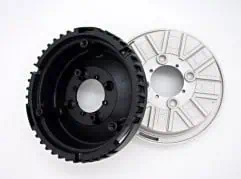
Abdeckung – Druckguß
Our die casting capacities
- Press range up to 2000 T
- Parts from tenth grams to more than 10kg
- Available materials :
- Aluminum (AS9U3/ AS12U/ AS10G/ DM23 etc.)
- Magnesium
- Zamak
- Possible anodization, neutral, black or colored
- 3 and 4 axis machining centers
- Assembly possibilities
What is Die Casting ?
Die Casting enables high speed manufacturing of non-ferrous metal parts. Each part will need only some seconds to be injected. The process involves heated metal injected at high pressure into a mold. Material will come back to solid state while cooling in the mold, taking the shape of the die. This process permits highly automatized manufacturing, a specific mold being able to be used for more than 100,000 shots.
Die casting development comes from automotive industry but is also widely used in other industries likes electronics & aeronautics.
Die casting advantages
- – High speed manufacturing of the parts means very low unit cost compare to other manufacturing processes
- – The high pressure in the mold enables for complex shapes that gravity casting would not allow
- – It is possible to reach section thickness lower than a millimeter: interesting gain in weight and material saving for some industries.
- – Parts casted are precise, in the range of a hundredth of a millimeter
- – Surface aspect is rather good
- – Due to production automation, high repeatability from one part to the next
Die casting disadvantages
- – High tooling and setting up costs
- – In order to improve fluidity, the casted material is rarely pure which may lead to the presence of marks on the parts, especially after black or colored anodization. AGC can propose materials solution in order to avoid aspect issue during black or colored anodization of die casting parts.
- – Presence of a (limited) draft angle
- – Micro-pores may be present in the material after casting